A Response to the Christian Nationalists and to the Christians of the Silent Majority.

“In a pluralistic society, it is neither possible nor desirable for Christians to try to force their views on others. It is not only preferable, but I believe obligatory, for Christians to stand up and articulate their views in the public square. We should try to persuade others using either prudential or moral arguments. We must be willing to live with “the will of the people.” At the same time, we must not be intimidated into accepting the position that our voice is not valid because it has a religious basis” Robert Orr

I was reading through this for class, and this material is so timely. 

While we see the division of believers welling up to the surface post-2020, and now more so post the death of Charlie Kirk, 

I urge all believers to come to know who God is and what we ought to do with that information, in the words of R. C. Sproul, “The biggest problem in Evangelicalism is that we don’t know who God is and the second biggest problem is that we don’t know what the gospel is, we’re lost.”

We identify only as Christians. I personally vote based on who will most not get in the way of the followers of Christ from sharing the gospel and who is doing the best job of influencing Christian values on the government not in intention or in heart, but in action and reality, as John states in 1 John 3:18, “Little children, let us not love in word or speech, but in action and in truth.”

Biblically, some are called to political office, and in that office, they are called to be salt and light. 

We are all called to lead wherever we are and to share the gospel wherever we go. Our call is to influence this world in whatever field we are called, and not abdicating our duties as reflections of Christ, because of niceness, the fear of man, or that you feel like things would be better if you were neutral whether that be in education, government, medicine, etc. As we influence these areas, dynamics will shift and things may look more Christ-like. But the goal isn’t a Christian government; the goal is to lead those in government to Christ, and as that happens, laws will be changed, and things will swing our way sometimes. Praise God. But it is not what we are called to do. We are called to love our neighbor and share the gospel with them. 

Also, Christian leaders continue to proclaim the Gospel, whether at a memorial service or at Waffle House. Rejoice!! Let God be glorified in all things.
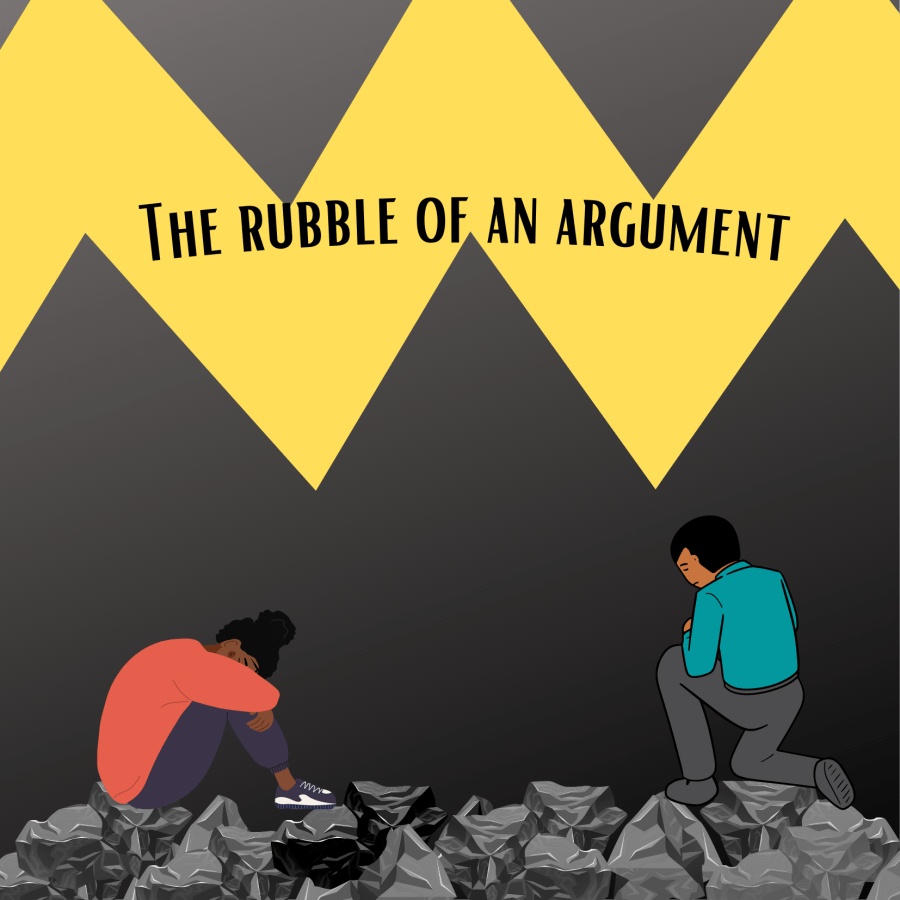

The Rubble of an Argument

Did I support you?
I’m sorry that I didn’t hear you better.
Man, I shouldn’t have argued with her about this.

These things go through my head as the dust clears after an argument. Many people, like me, begin to assess what happened and why. We look for remnants of what once was and try to rebuild from nothing— the rubble. But is it really nothing? I believe that the rubble actually has the hidden answers to a successful relationship.

The after affects of arguments tell us stories of the problems of the past. The awkward silence, raised voices, slammed doors, unnecessary comments.

Like history, if we don’t learn from our mistakes we are doomed to repeat them.

I believe that if studied, measured and analyzed properly, that “stone” of miscommunication that a builder might refuse could then turn into a chief cornerstone of rebuilding lost intimacy and connection in a relationship. Focusing on those key issues in arguments like assumptions, superlatives like “always and never”, the raised voices, the errant comments—taking those left over bite-sized pieces of a disagreement and using that as a building block. We can allow ourselves not to start from ground zero but to start from a place of understanding, hearing, accountability and agreement.

“Understand this, my dear brothers and sisters: You must all be quick to listen, slow to speak, and slow to get angry.” James‬ ‭1:19‬ ‭NLT‬‬

A Topic of the Times

If not for someone else,
If not for God.

How many of us have those “if not for” stories?

How many of us have been saved by the best friend?
The bartender or a family member?

Was it just that we were so much more aware than others?

That we somehow overcame our drunkenness to rationalize that we should give our keys up to a friend or family member?

I’m so eager and yet so apprehensive to tell this story.
My near Henry Ruggs-like incident.

I’ll tell a story right now of my own mistake with alcohol. I was out with friends drinking a daiquiri watching a basketball game. I felt myself getting really drunk and not feeling well. Though I was surrounded by friends, I snuck off due to embarrassment for the state I was in and figured it was okay to drive myself home.

What took place over the next five hours hammered humility, empathy, and kindness into me. When I tell this story, I always tell the listeners that I wasn’t driving. It was God driving. God drove a distance of 7.1 miles in rush hour traffic, through busy intersections, traffic lights and pedestrian crossings, as I snapped in and out of my drunken consciousness.

The simple fact that this mistake could happen to anyone was pressed into my head like the curbs I hit, breaking my cars axels.

How much I wasn’t in control was slammed into me the way I slammed my foot into the brakes. Finally, I woke up long enough to understand that I needed to pull my car over.

What I awoke to was a car full of vomit and the fear over what I had done but also the awareness of God’s presence in my car. I could have died; I could have killed someone. I could have been arrested, but God saw that it was okay for me to just go home.

We can all say stop being stupid, but we all still make mistakes.

As for the Ruggs situation, I would rather mourn the loss of life than point the finger. I would rather acknowledge the fact that a person made a mistake and would take it back if they could.